

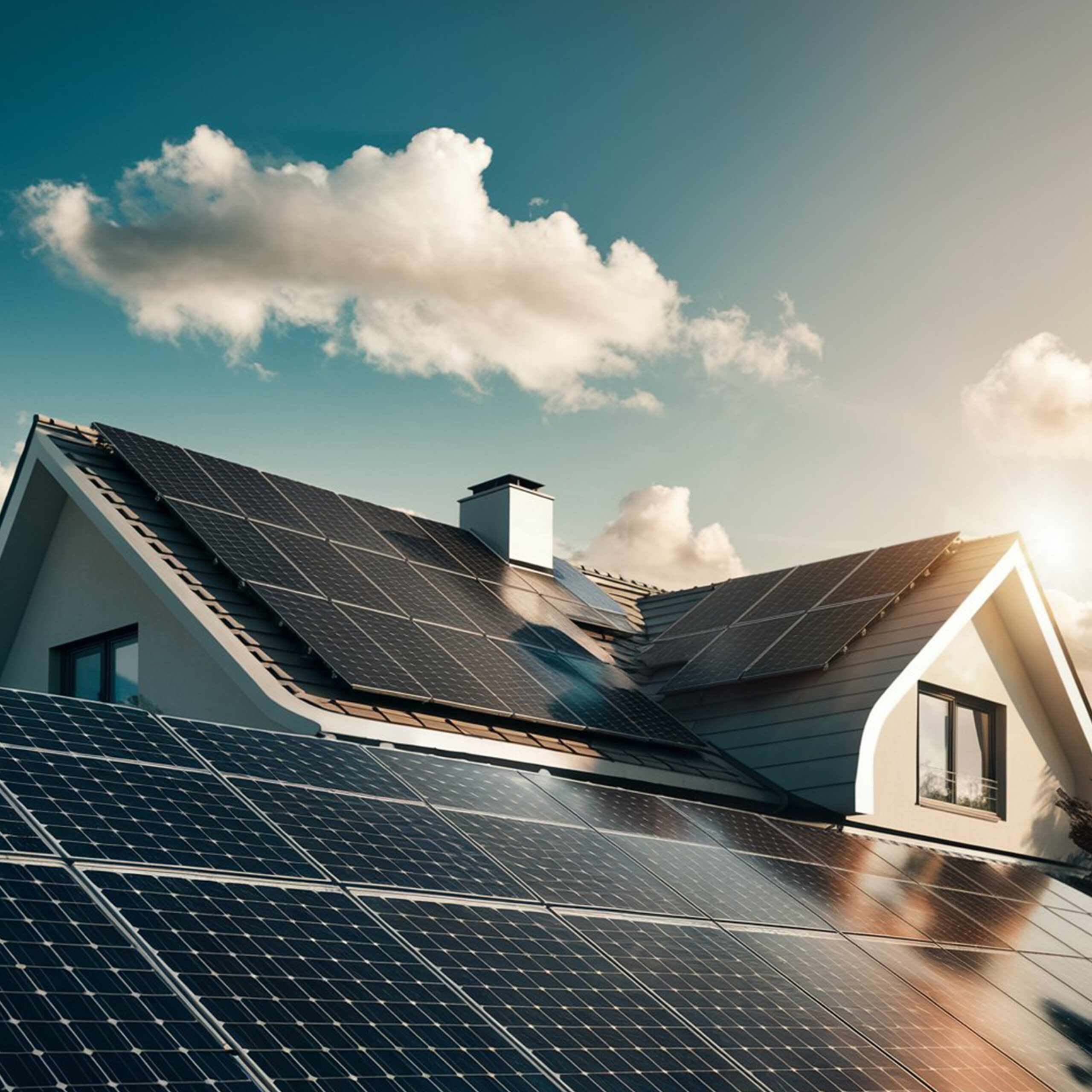
You see a solar ad online:
5 kW rooftop solar package. Panels, inverter and installation included.
The price looks reasonable, so you call the company and say, “I saw your 5 kW package. Can you install the same at my house?”
The answer shouldn’t immediately be yes.
There’s nothing wrong with the package. In fact, standard packages are useful when you’re trying to understand pricing and compare different options. But before anything is finalised, someone needs to look at your house.
Maybe 5 kW is exactly right. Maybe your roof has plenty of space and the installation will be straightforward. Or maybe there’s a water tank right where the panels would ideally go. A coconut tree may shade one side of the roof in the afternoon. Your electricity consumption may also be very different from another home using the same system size.
Until someone looks at these things, a package is really just a starting point.
Your roof gets the final say.
The Same 5 kW System Can Look Very Different on Two Houses
Imagine two neighbours deciding to install 5 kW solar.
The houses look fairly similar from the road. Once you go upstairs, though, the difference becomes obvious.
The first house has a large open terrace with very few obstacles. There’s plenty of usable space and little obvious shade.
Next door, there’s a staircase room on one side, a large water tank on the other and a coconut tree close to the property.
Both homeowners may still end up with 5 kW systems.
But the layouts shouldn’t automatically be identical.
The panels may need to be positioned differently. The inverter may need another location. Cable routes may change. Space may also need to be left for people to move around the terrace.
That’s really what site-specific design is about.
Instead of forcing the house to fit a standard solar layout, the solar layout is planned around the house.
Your Neighbour’s System Is a Reference, Not Your Design
A lot of solar conversations begin with:
“My neighbour installed 5 kW.”
That’s actually useful information.
You can ask how much they paid, what equipment they chose, whether they’re happy with the installation and how the system has been performing.
But their 5 kW system doesn’t automatically mean you need 5 kW too.
They may use more electricity than your family. They might run several air conditioners regularly. Their house may be occupied throughout the day while yours is empty for long periods.
Their roof conditions can also be completely different.
You may eventually arrive at the same 5 kW capacity.
That’s perfectly fine.
The important thing is that there’s a reason for choosing it beyond “that’s what the neighbour installed.”
What Looks Like an Empty Roof Usually Isn’t
From the ground, a terrace can look enormous.
Then you go upstairs.
There’s the water tank. The staircase room takes up more space than expected. A pipe runs through one side of the terrace. There’s an old dish antenna sitting in a corner.
And then there’s the tree beside the house.
None of these things necessarily prevents you from installing solar. They’re simply things that should be considered before deciding where the panels will go.
This is why an actual site visit is useful.
The installer can see how much usable space is available, where panels could be positioned and whether anything around the property is likely to affect the layout.
Shade Can Change During the Day
Visit the roof at 11 AM and everything may look perfect.
Bright sunlight. No obvious shade.
Come back later in the afternoon and one part of the roof may look completely different.
A nearby tree could shade a section of the terrace. A taller building next door might affect another area. Even your own staircase room or water tank can create shade depending on where the panels are positioned.
You don’t need to stand on the roof all day watching shadows move.
That’s something the person planning the system should think about.
As a homeowner, a simple question is enough:
“Is anything around the house likely to shade these panels?”
If the answer is yes, the layout should take that into account.
Leave Enough Space to Use the Roof
Solar panels may stay on your roof for many years.
During those years, you’ll still need the roof for other things.
The water tank may need cleaning. A pipe could need repairing. Someone may need to inspect part of the terrace. The roof itself may require maintenance at some point.
That’s why filling every available centimetre with panels isn’t always a good idea.
The system should generate electricity without making the rest of the roof unnecessarily difficult to use.
Leaving sensible access around important areas can make a big difference later.
You probably won’t think much about that space on installation day.
You’ll appreciate it when the plumber needs to reach the water tank three years later.
System Size Should Start With Your Electricity Use
The roof is only one part of the conversation.
The installer should also understand how much electricity the property actually uses.
You don’t need to prepare a complicated report. A few recent electricity bills are usually a useful starting point.
It’s also worth mentioning any major changes you’re expecting.
Maybe you’re planning another air conditioner. Perhaps you’re considering an EV. Your electricity consumption may increase for some other reason.
Once the installer understands your usage, there’s a much better basis for discussing system capacity.
Maybe 5 kW makes sense.
Maybe another capacity makes more sense.
Either way, you should be able to ask:
“Why are you recommending this size?”
And get a clear answer.
Don’t Focus Only on the Solar Panels
Panels naturally get most of the attention.
Customers compare brands, wattages, technologies and warranties. Before long, you can have several browser tabs open and three different people recommending three different panels.
There’s nothing wrong with researching the equipment.
Just remember that the panel is one part of the system.
The inverter needs a suitable location. The mounting structure has to work with the roof. Cables need to be routed properly. Electrical components have to be planned and installed correctly.
Then all of those parts need to work together.
You can choose excellent panels and still end up unhappy with an installation that wasn’t properly planned.
Decide Where the Inverter and Cables Are Going Before Installation
Ask the installer a simple question:
“Where are you putting the inverter?”
Ideally, that decision shouldn’t be made halfway through the installation.
The same applies to cable routing.
You don’t need every electrical detail explained to you. You simply want to know that someone has already thought about how the installation will come together.
There’s a noticeable difference between:
“We’ll install the inverter here and route the cable along this side.”
and:
“We’ll find somewhere once we start.”
A little planning beforehand usually makes the finished installation much cleaner.
Standard Solar Packages Are Still Useful
A standard package isn’t a bad thing.
If you’re just starting to explore solar, packages make the process easier.
You can see roughly what different capacities cost. You can understand which panels and inverter are being offered. You can compare one quotation with another.
Use that information.
Just don’t treat the package as the final design before the property has been assessed.
Think of a standard package as saying:
“This is roughly what I’m interested in.”
Then let the site visit determine whether the capacity, layout and equipment arrangement actually make sense for your property.
Sometimes very little needs to change.
Sometimes the capacity stays exactly the same but the panel arrangement changes.
And occasionally, looking at the property may lead to a different recommendation altogether.
That’s the point of checking the site.
Good Solar Design Often Comes Down to Small Decisions
Site-specific design doesn’t always involve some dramatic engineering solution.
Often, it’s a series of ordinary decisions:
Move a row of panels slightly to avoid shade.
Leave enough room to reach the water tank.
Use a more practical location for the inverter.
Route the cables through a cleaner path.
Avoid putting a panel in an awkward section of the roof.
Leave access to an area that may need maintenance later.
None of these decisions sounds particularly exciting.
But together, they can make the finished installation much more practical.
See the Layout Before Installation Begins
Before the installation team starts fixing structures to the roof, ask to see where everything is going.
If you’re discussing your project with a solar company in kerala, ask them to explain the proposed layout in simple terms.
You should have a basic idea of:
where the panels will be installed,
which areas are being avoided because of shade,
where the inverter will go,
how the cables will be routed,
and which parts of the roof will remain accessible.
You know your property better than the installation team does.
If your family regularly uses a particular section of the terrace, tell them.
If a plumber needs access behind the water tank, mention it.
If something about the proposed layout doesn’t make sense to you, ask.
It’s much easier to change the plan before installation than after everything has been fixed to the roof.
More Panels Isn’t Automatically Better
There’s often a temptation to use every last bit of available roof space.
You see a small empty section and think:
“Can’t we fit one more panel there?”
Maybe you can.
That doesn’t always mean you should.
If that panel will sit in more shade, make the layout awkward or block useful access, squeezing it in may not improve the overall installation.
The goal isn’t to cover as much of the roof as physically possible.
The goal is to create a system that works well for the property.
A Good Design Should Eventually Become Invisible
After a few months, you probably won’t think much about the layout.
And that’s a good thing.
You’ll walk onto the terrace and still be able to reach the places you need.
The panels will be where they’re supposed to be.
The inverter will be accessible.
The cables won’t look like an afterthought.
Nothing will feel unnecessarily awkward.
You probably won’t stand there thinking:
“What an excellent site-specific solar design.”
You’ll simply think:
“This works.”
That’s usually the sign that somebody planned it properly.
Before You Finalise the System
You don’t need a long technical checklist.
Have one proper conversation with the installer.
Show them your electricity bills. Take them to the roof. Explain how you use the terrace and point out anything they should know about.
Then ask:
Why are you recommending this system size?
Where exactly will the panels go?
Is there any shade we need to consider?
Can we still access the water tank?
Where will the inverter be installed?
How will the cables be routed?
Does anything about this roof change the original package?
Can I see the proposed layout before installation?
You aren’t trying to become a solar engineer.
You’re simply checking that somebody has actually thought about your house before putting equipment on it.
Final Thoughts
Standard solar packages make things easier.
They give you an idea of the capacity, equipment and price.
That’s useful.
What they can’t tell you is what your property looks like.
A package doesn’t know there’s a water tank in the middle of your terrace.
It hasn’t seen the coconut tree beside the house.
It doesn’t know where afternoon shade falls.
It doesn’t know which part of the roof your family still needs to use.
And it hasn’t seen your electricity bills.
That’s why the package should be the starting point, not the final design.
Let someone see the property.
Let them understand how much electricity you use.
Talk about how the roof is actually used.
Then decide what should be installed.
You may still end up with exactly the same 5 kW package you originally saw.
The difference is that now you’re choosing it because **it makes sense for your
Frequently Asked Questions
Why is site-specific solar design important?
Every property is different. Roof space, shade, electricity usage and existing structures can all affect how a solar system should be planned.
Can I choose the same solar capacity as my neighbour?
Maybe, but your electricity usage and roof conditions may be different. It’s better to choose the capacity based on your own property and requirements.
Why is a site visit needed before solar installation?
A site visit helps the installer check usable roof space, shade, water tanks, staircase rooms and other factors that can affect panel placement.
Is a standard solar package a bad choice?
No. It’s a useful starting point for comparing prices and equipment. The final design should simply be adjusted to suit your property.
Should I see the panel layout before installation?
Yes. It helps you understand where the panels and inverter will go and whether important areas of the roof will remain accessible.
Does shade affect solar panel placement?
Yes. Trees, nearby buildings and rooftop structures can create shade, so they should be considered when deciding where panels will be installed.