

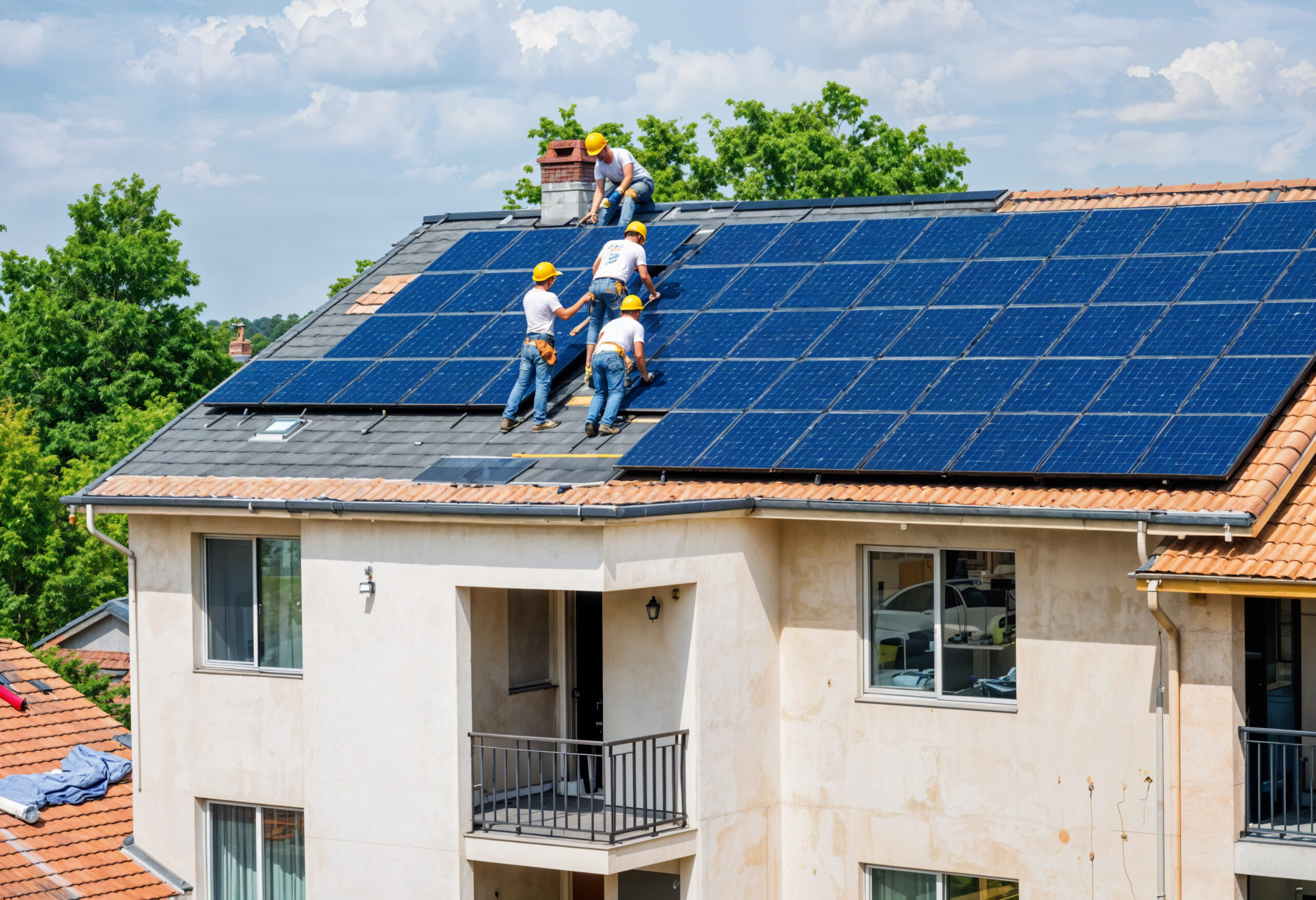
When people think about installing solar panels, the first things that usually come to mind are the cost, the quality of the panels, and how much they might save on electricity bills. These are all important, of course. But there is another question worth asking before making a decision: who is going to install the system, and how well will they do the job?
Solar panels are not something most homeowners replace every few years. Once installed, you expect them to work reliably for a long time. That is why the quality of the installation matters just as much as the equipment you choose. Even good panels can cause problems if the system is poorly designed, the mounting is unsuitable, or the electrical connections are not handled properly.
The difficult part is that you may not notice poor workmanship simply by looking at a finished installation. Everything might appear fine on the first day, while small issues only become apparent later. So, before choosing a solar company, it helps to understand what to look for and which questions are worth asking.
1. The First Thing to Check Is Whether They Understand Your Needs
A solar company should not recommend a system before understanding how much electricity your household actually uses. Your monthly bills, daily routines, and the appliances you use all help determine what size of system might suit you.
Think about a family that runs air conditioners regularly, especially during the warmer months. Its electricity requirements could be quite different from those of a household that mainly uses fans, lights, and a few basic appliances. Installing the same system for both homes would not necessarily produce the same results.
Your roof matters just as much. The available space, direction, sunlight exposure, and shade from nearby trees or buildings can all affect solar generation. A large roof does not automatically mean every part of it is suitable for panels.
Before recommending a system, the installer should take time to understand these details. If someone gives you a quotation without asking about your electricity consumption or assessing your roof, it is reasonable to ask how they arrived at their recommendation.
The aim is simple: you want a system that makes sense for your home, not one that looks impressive on a quotation but does not match your actual needs.
2. Know Exactly What You Are Paying For
When you start comparing solar companies, you will probably come across descriptions such as “premium solar panels,” “advanced technology,” or “high-efficiency inverter.” These phrases may sound reassuring, but they do not tell you which products you will actually receive.
Ask the company to include the panel and inverter brands, model numbers, system capacity, and details of the main components in its quotation. This makes it much easier to compare offers and understand what you are paying for.
For example, two companies might quote similar prices for a rooftop solar system, but the equipment, warranties, or installation work included in their offers could be different. Without the details, you may end up comparing two systems that are not really equivalent.
It is also worth asking why the company recommends a particular panel or inverter. If your roof has limited space, higher-efficiency panels may be useful. If space is not a concern, overall cost, product specifications, warranty coverage, and system design may matter more to your decision.
You do not need to know every technical detail before buying solar. A good installer should be able to explain the options in everyday language and help you understand the differences without making the decision more confusing than it needs to be.
3. Your Roof Needs Attention, Too
Most people naturally focus on the panels when planning a solar installation. What is easier to overlook is the roof underneath them.
The mounting structure must be suitable for your roof, and the installation should not create avoidable problems with drainage or water entry. If the work requires drilling into the roof, ask how those areas will be protected. It is also worth discussing how cables will be routed and whether the finished installation will leave enough access for future maintenance.
This deserves particular attention in Kerala, where heavy monsoon rain and humidity are part of the local climate. The mounting arrangement and components should be chosen with the property’s roof type and weather exposure in mind.
You do not have to inspect the roof yourself or understand every installation technique. Simply ask the company how it plans to secure the panels and protect your property. A clear explanation is a good starting point.
After all, the purpose of installing solar is to improve your home’s energy setup, not to create a new problem that could have been avoided with better planning.
4. Do Not Ignore the Electrical Work
Once the panels are mounted, there is still important work to complete. The wiring, connectors, earthing, and electrical protection all need to be appropriate for the system. The inverter must also be installed in a suitable location, following the manufacturer’s instructions.
These details are not always obvious when you look at the finished installation, but they play an important role in safe operation.
Before choosing a company, ask who will handle the electrical work and what checks will be completed before the system is switched on. You can also ask whether you will receive commissioning documents and instructions on how to monitor the system after installation.
You do not need to become an electrical expert to make an informed choice. You simply need to know that the work will be handled by qualified people and that the company has a clear process for checking the installation.
If the installer cannot explain its safety procedures in a way you can understand, ask for more information before moving forward.
5. Take a Look at the Company’s Previous Work
A company may explain its services confidently, but it is worth finding out what its work looks like in practice.
Ask whether it can share examples of completed installations or provide customer references where available. If you have the opportunity to view a finished system, look at how the panels are mounted, whether the cables are secured neatly, and whether the inverter has been positioned sensibly.
A tidy installation is encouraging, although appearance alone cannot confirm that every technical detail is correct. It is one part of the picture, not the whole picture.
You should also find out who will carry out the work. Some companies use their own installation teams, while others work with subcontractors. Either approach can work, but you should know who will supervise the job and who will be responsible if something needs attention later.
This is particularly important because you may need to contact the company long after the installation team has left your property. Knowing who is responsible can save time and frustration if an issue comes up.
6. Find Out What Happens After the Panels Are Installed
It is easy to focus on getting the solar system installed and forget about what happens afterward. But once the system starts operating, you may have questions about electricity generation, need help understanding the monitoring app, or encounter an equipment issue.
That is when after-sales support becomes important.
Before choosing an installer, ask how you can request service and who will help if a component develops a fault. Find out whether the company can assist with manufacturer warranty claims and what maintenance support it offers.
Take some time to understand the warranties, too. Solar panels generally have product warranties covering specified defects and performance warranties relating to their output over time. Inverters and installation workmanship may have separate terms.
Do not assume that every component has the same coverage. Read the actual documents and ask the company to explain anything that is unclear.
No solar company can reasonably promise that nothing will ever go wrong. What matters is whether it explains its responsibilities clearly and gives you a practical way to seek help if you need it.
7. Compare Quotations Carefully Before Choosing
Getting quotations from different solar companies is a sensible way to explore your options. The mistake is choosing one simply because its final price is lower.
Imagine that one company offers a rooftop solar system at a lower price, while another provides a more detailed quotation with different equipment or additional installation services. At first glance, the cheaper offer might seem like the obvious choice. But unless you compare the details, you will not know whether both companies are offering the same thing.
Check the system capacity, panel and inverter models, mounting structure, wiring, electrical protection, installation charges, and commissioning. Ask about warranty terms, payment conditions, installation timelines, and anything excluded from the price.
If a company estimates how much electricity your system will generate, ask what the estimate is based on. Actual generation depends on sunlight, shading, roof orientation, system design, and other site conditions. The savings you achieve will also depend on your electricity usage and applicable billing arrangements.
A lower quotation is not automatically a bad choice, just as a higher one is not automatically better. What matters is understanding the differences and deciding which proposal offers the right balance of quality, suitability, and cost.
8. A Few Questions Can Tell You a Lot
You do not need a long technical checklist to have a useful conversation with a solar installer. A handful of straightforward questions can help you understand whether the company has considered the important details.
Before signing an agreement, ask:
Have you assessed my electricity consumption and roof conditions?
Which panel and inverter models are included in the quotation?
How will the panels be mounted, and how will the roof be protected?
What safety checks will be completed before the system starts operating?
Which warranties apply to the equipment and installation?
Who should I contact if I need maintenance or repairs?
Pay attention to how the company responds. Does it explain things clearly? Is it willing to put important details in writing? Does it acknowledge that actual system performance depends on your property and energy use?
You should not feel uncomfortable asking questions about something you are investing in. If an important detail is unclear, take the time to understand it before committing.
9. Be Careful When a Company Makes Big Promises
When you are comparing solar companies, it is natural to be drawn to attractive offers and promises of substantial savings. But it is worth checking whether those promises are supported by a proper assessment.
Be cautious if a company refuses to identify the equipment it plans to install, avoids discussing warranties, or pressures you to make an immediate payment. Promises that your electricity bill will disappear completely also deserve careful consideration, especially if the installer has not reviewed your electricity usage and property.
The same applies to generation estimates and after-sales commitments. Ask for the details in writing so you know what has actually been offered.
A reliable installer should explain what the proposed system can reasonably achieve, what factors could affect its performance, and what support is available after installation. You should leave the conversation with a clearer understanding of your options, not more questions about promises that were never properly explained.
Conclusion: Choose a Solar Company You Can Trust to Do the Job Properly
Choosing a solar installer is about more than finding an attractive price or a panel brand you recognise. The way the system is planned, the care taken during installation, and the support available afterward all deserve attention.
Take your time when comparing quotations. Ask about the equipment, understand how the roof will be protected, and make sure you know what the warranties cover. These simple steps can help you make a more informed decision and reduce the risk of unpleasant surprises later.
If you are exploring rooftop solar for your property, you can visit the best solar company in Kerala service page to learn more about Zeesonic’s solar solutions and explore options for your needs.
Frequently Asked Questions
Why does the quality of solar installation matter?
Solar panels are only one part of a complete system. The mounting, wiring, electrical protection, and overall design also matter. Poor installation can lead to avoidable faults, safety concerns, or performance issues.
What should I check before accepting a solar quotation?
Look at the system capacity, panel and inverter models, installation scope, mounting structure, electrical components, warranty terms, payment conditions, and exclusions. Make sure you understand what the price includes before comparing it with another offer.
How can I check whether a solar company has good installation experience?
Ask to see examples of completed projects and request customer references where available. It is also worth asking who will supervise your installation and how the company handles problems that arise after the work is finished.
What should Kerala homeowners consider before installing rooftop solar?
Roof condition, monsoon rainfall, drainage, humidity, shading, and access for maintenance are all worth discussing with the installer. The system should be designed around your property’s specific conditions rather than using a one-size-fits-all approach.
Are solar panel warranties and installation warranties the same?
No. Panel product warranties, performance warranties, inverter warranties, and installation workmanship coverage can have different terms. Check each document carefully so you know what is covered and how to request support.