

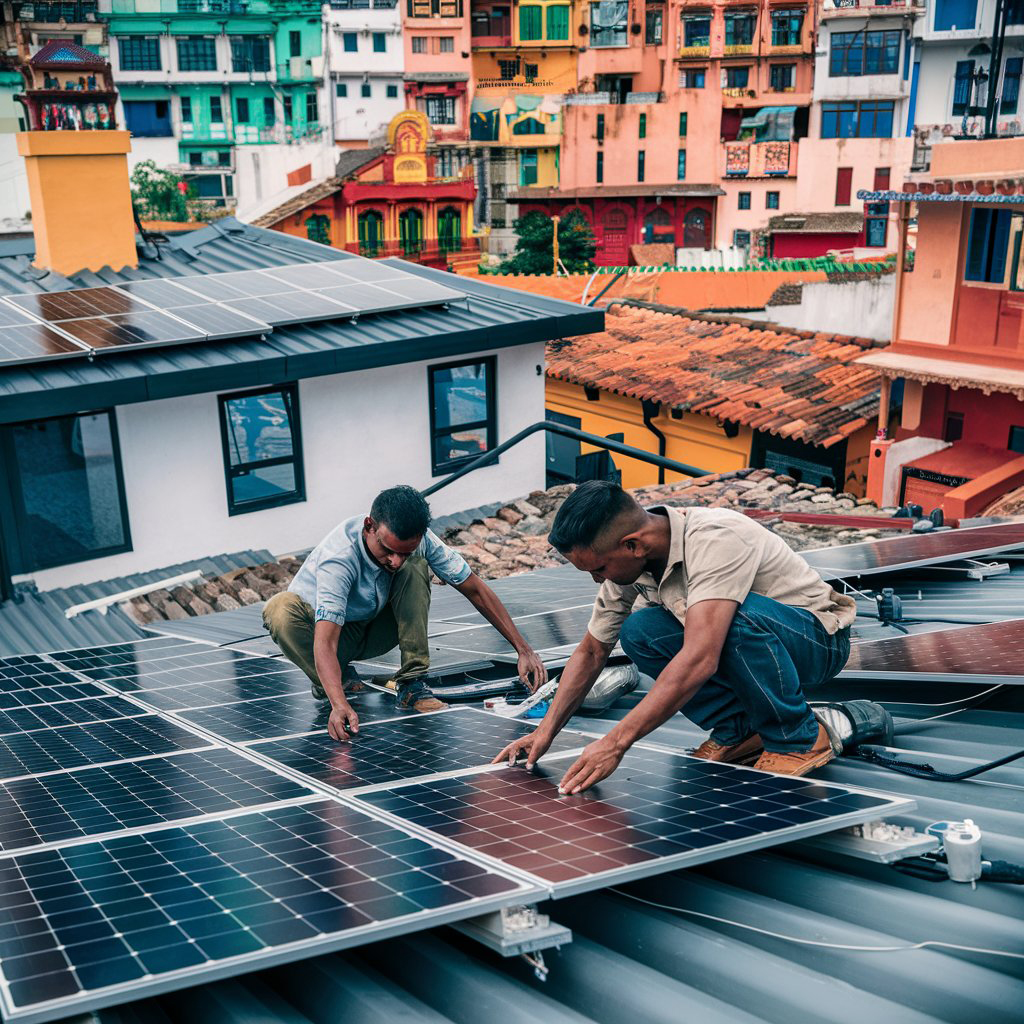
When most people decide to install solar, they spend a lot of time looking at panels and inverters. Which panel should I choose? How many kilowatts do I need? Which inverter is reliable? How much will the whole thing cost?
Then the quotation arrives.
Along with all the familiar items, there are usually a few electrical terms that don’t mean much to someone seeing them for the first time. SPD is often one of those terms.
SPD stands for Surge Protective Device. It sounds more complicated than it actually is. Its job is to help protect electrical equipment when there’s a sudden increase in voltage.
It’s not a part of the solar system you’ll pay much attention to after installation. You won’t be checking its performance every morning like you might check your solar generation. In fact, most homeowners will barely notice it’s there.
But it’s still an important part of the electrical protection around the system.
So, Why Does a Solar System Need an SPD?
Imagine there’s a heavy thunderstorm in your area. There’s lightning nearby, the rain is coming down hard and the power flickers for a moment.
Everything may seem normal again a few seconds later, but electrical systems can experience sudden voltage surges during events like these. Lightning-related effects are one possible reason, although surges can also happen because of other events in an electrical system.
The problem is that equipment such as a solar inverter contains electronic components that can be sensitive to sudden overvoltage.
That’s where the SPD comes in.
It helps limit the sudden rise in voltage and divert surge current away from the equipment being protected.
In practical terms, an SPD is there to:
help protect electrical equipment from sudden voltage surges,
limit transient overvoltages,
divert surge current,
and work alongside the other electrical protection in the solar system.
You don’t need to understand exactly what happens inside an SPD every time there’s a surge. For a homeowner, knowing what it’s there for is usually enough.
Solar Isn’t Just Panels and an Inverter
When you look at a completed rooftop solar system, the panels get almost all the attention. The inverter probably comes second.
But those are only the most visible parts.
Behind them are cables, connectors, breakers, isolators, earthing and other electrical components connecting the whole system together. They’re not particularly exciting to look at, but the solar installation depends on them.
This is worth keeping in mind when you’re comparing solar rooftop panels near coimbatore.
Suppose you receive two quotations. Both offer the same system capacity. The panel brands look good. The inverter specifications are similar. One quotation is cheaper, so it immediately looks like the better deal.
But look a little deeper and there may be differences in:
electrical protection,
cable quality and sizing,
earthing,
connectors,
mounting work,
and the overall quality of installation.
These aren’t always the first things people compare, especially when they’re installing solar for the first time. But they’re still part of what you’re paying for.
An SPD is one of those small details.
Does an SPD Protect My Solar System From Lightning?
This is probably the easiest thing to misunderstand about an SPD.
Because surge protection is often discussed together with lightning, it’s tempting to think that installing an SPD means the solar system is now completely protected from lightning.
That’s not quite how it works.
An SPD can help protect electrical equipment from certain surges, including surges associated with lightning. But it isn’t a complete lightning-protection system by itself.
Think of it as one part of the overall electrical protection.
Earthing still matters. Breakers and other protection devices still have their own jobs. Depending on the property and the way the solar system is designed, other protection measures may also need to be considered.
So an SPD is useful, but it shouldn’t be expected to do everything.
Where Is the SPD Installed?
This is where solar discussions can suddenly become very technical.
You’ll hear terms such as DC side, AC side, voltage ratings and different SPD types. Unless you work with electrical systems, there’s no reason all of this should already make sense to you.
The basic idea is much simpler.
Your solar panels produce DC electricity. That electricity travels to the inverter, where it’s converted into AC electricity.
Depending on the design of the system and the applicable requirements, surge protection may be provided at appropriate points on:
the DC side,
the AC side,
or both.
You don’t need to decide this yourself.
You also shouldn’t have to sit with the quotation trying to work out which SPD rating your system needs. Selecting the right device and deciding where it should be installed is part of the electrical design.
What you can do is ask about it.
If you see SPD mentioned in the quotation, ask where it will be installed and what protection is being provided. The answer should make sense even if you’re not an electrician.
SPD, MCB and RCCB Aren’t the Same Thing
Open an electrical box and, if you’re unfamiliar with electrical equipment, a lot of the devices inside can look more or less the same.
Small boxes. Small switches. Lots of letters.
But they’re doing different jobs.
SPD: Helps protect against sudden voltage surges.
MCB: Provides protection against overcurrent and short-circuit conditions.
RCCB: Provides residual-current protection.
You don’t need to memorise all of these before buying solar.
The main thing to understand is that one device doesn’t automatically replace another. Different electrical problems need different types of protection.
But My Inverter Already Has Protection
Many modern solar inverters come with built-in protection features, and that’s a good thing.
But it doesn’t necessarily mean every protection requirement of the complete installation has been covered.
The inverter is still only one part of the system.
Instead of trying to read through pages of inverter specifications yourself, ask the installer a simple question: what protection is already provided by the inverter, and what protection are you adding outside it?
You don’t need the answer to turn into a technical lecture.
You just want to know that somebody has actually thought about the complete system instead of assuming the inverter takes care of everything.
Not Every SPD Is the Same
There’s another small detail here.
Seeing “SPD included” in a quotation doesn’t automatically tell you everything you need to know.
SPDs come in different types and ratings, and the device has to be suitable for the electrical system and the location where it’s being installed.
That matters particularly on the DC side of a solar installation.
Again, this isn’t your homework.
You shouldn’t have to become an SPD expert before somebody can install solar on your house. Choosing the correct protection device is part of the installer’s responsibility.
As a homeowner, a few straightforward questions are enough:
What SPD are you using?
Where will it be installed?
Is it suitable for this solar system?
Is surge protection being provided on the required sides of the system?
If the installer can explain that clearly, great.
Good Products Don’t Fix Poor Installation
It’s easy to get caught up in brand names when buying solar.
A premium panel sounds reassuring. A well-known inverter sounds reassuring. Good electrical components are certainly worth having.
But even good equipment has to be installed properly.
A high-quality SPD won’t fix poor earthing. An expensive inverter won’t fix bad cable connections. Premium solar panels won’t make up for careless electrical work.
The system has to work together.
That’s why it’s worth looking beyond the big brand names when you’re comparing quotations. Sometimes the difference between two installations isn’t the panel at all. It’s the care taken with all the smaller things around it.
Will I Need to Think About the SPD Again?
Probably not very often.
Once your solar system is running, you’ll have much more interesting numbers to look at. How many units did it generate today? How much did you save this month? Why was generation lower when it rained all afternoon?
The SPD will quietly disappear into the background.
That’s perfectly normal.
It just shouldn’t be forgotten forever.
SPDs can degrade or become damaged after dealing with surge events, and many devices have a small status indicator that helps show their condition.
So during future solar or electrical maintenance, the SPD can be checked along with the rest of the installation. That may include checking:
the SPD’s condition,
its status indicator,
the surrounding electrical connections,
and whether replacement is required.
You don’t need to keep opening the electrical box yourself to inspect it. It’s simply something that can be included when the system is professionally checked.
Before You Say Yes to a Solar Quotation
You don’t need to examine every line of a solar quotation with a magnifying glass.
Start with the things that matter most to you: system capacity, panel brand, inverter, expected generation, warranty and price.
Then spend another minute looking at the electrical side.
See whether the quotation clearly mentions:
surge protection,
AC and DC protection,
breakers and isolators,
earthing,
cables,
and the other electrical components being provided.
If there’s something you don’t understand, ask what it means.
You’re not trying to become an electrician. You’re simply making sure you’re comparing complete solar installations rather than comparing only panels and prices.
Final Thoughts
An SPD probably won’t be the part of your solar installation you remember.
And that’s okay.
It’s a small electrical protection device with a simple purpose: helping protect equipment from sudden voltage surges.
You don’t need to know every SPD type, memorise electrical ratings or understand the complete wiring diagram of your solar system.
But knowing why the device is there helps you look at a solar quotation a little differently.
Panels matter. The inverter matters. Price matters.
So do the cables, earthing, breakers, connectors and protection devices that nobody talks about quite as much.
Because once the panels are on your roof, all of those smaller parts become part of the same solar system.
And the SPD is one of them.
Frequently Asked Questions
What does SPD mean in solar?
SPD stands for Surge Protective Device. It helps protect electrical equipment from sudden voltage surges.
Why does my solar system need an SPD?
Solar systems contain electrical and electronic equipment that can be affected by transient overvoltages. An SPD helps limit these surges and divert surge current.
Is an SPD the same as an MCB?
No. An SPD is used for surge protection, while an MCB protects against overcurrent and short-circuit conditions.
Will an SPD completely protect my solar system from lightning?
No. An SPD can help with lightning-related electrical surges, but it should be considered one part of the overall electrical protection rather than complete lightning protection on its own.
Should the SPD be checked after installation?
Yes. An SPD can degrade or become damaged after surge events, so its condition can be checked during appropriate solar or electrical maintenance.